

Here is a little about the founder of Buxstock (me), and how one record, one hand-me-down guitar and a lot of loud amplifiers kept steering my life.
The record that started it
My parents took me to a birthday party at their friends’ house. I didn’t really know the birthday girl, who was some years older than me, so while the party carried on in the back yard I retreated inside. In the lounge I found a large record player, better known as a gramophone.
Next to it sat a “Matel record holder” with 20 or 30 records. Flicking through, I stumbled on one with a picture of some crazy bodgies in a lounge room with a drum kit, amplifiers, guitars and a bicycle.
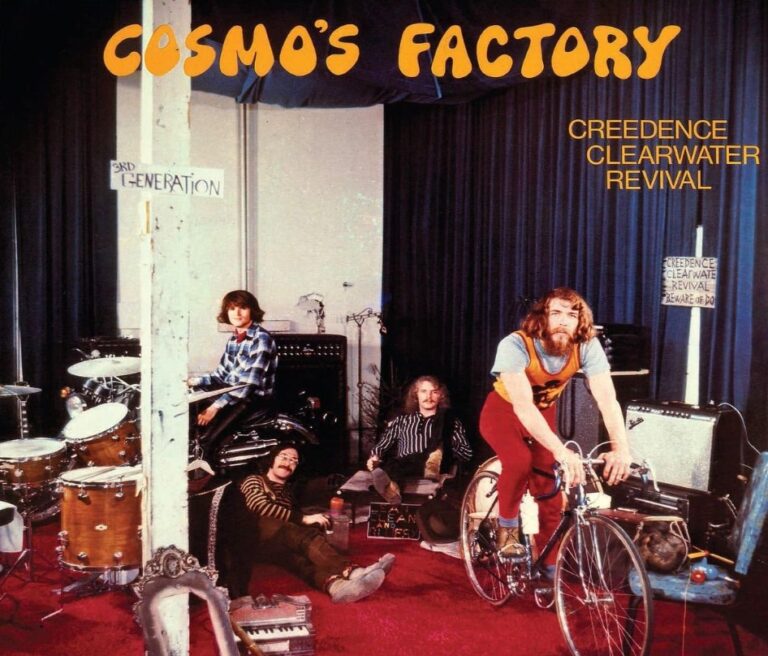
The girl’s parents encouraged me to spin it and crank the volume. The first track mesmerised me instantly: “Ramble Tamble”, from Cosmo’s Factory by Creedence Clearwater Revival. I played the album over and over, and when I got home I couldn’t get the sound out of my head. A bicycle, a drum kit and a wall of amplifiers on a record sleeve, and my life had a direction.
“I couldn’t get the sound out of my mind.”
I was a kid standing in someone else’s lounge room, and for the first time music didn’t feel like something that just came out of the radio. It felt like something people did: real people, in a room like that one, with real drums, real amps and real guitars. The sound hit me in the chest, and I wanted to be part of it. I didn’t know it yet, but that was the moment everything that followed was set in motion.
Aria TA50 and a Coronet 5W
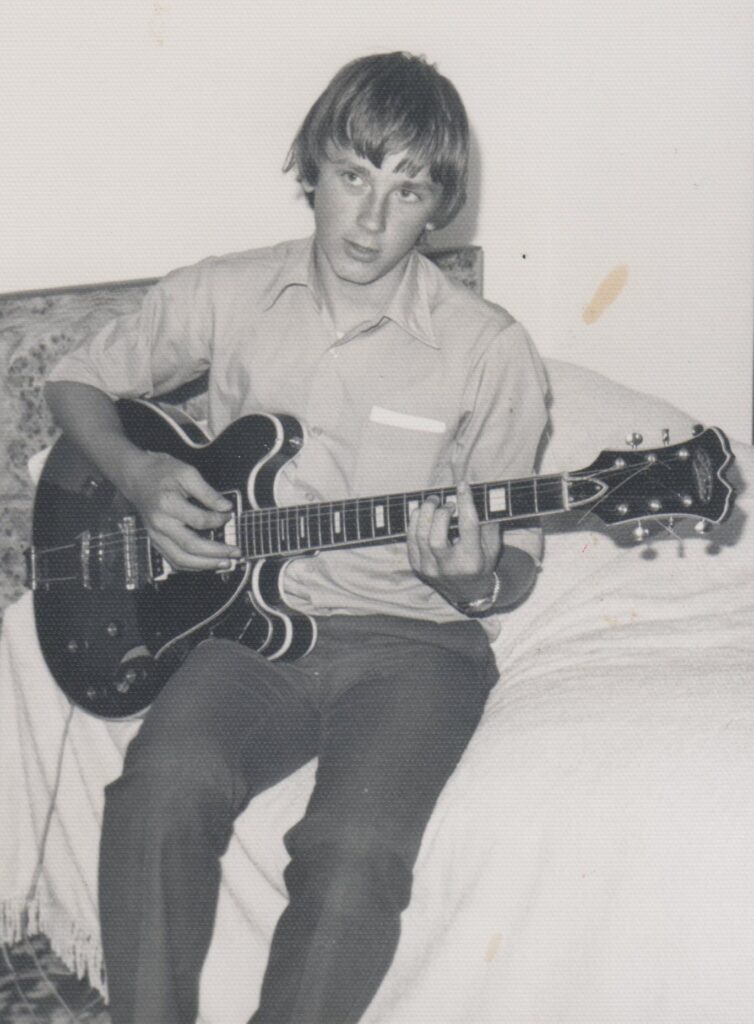
The Aria TA50 came from my uncle. He played in a band called The Corals, who played clubs and dances and sounded like The Shadows. I still remember the twang in his guitar. At 12 he handed it down to me, along with the case and a handful of black diamond strings. I tuned it open to whatever sounded good, broke several strings, and it was a steep learning curve until I finally learned how to tune it. My uncle and I still catch up over tunes to this day.
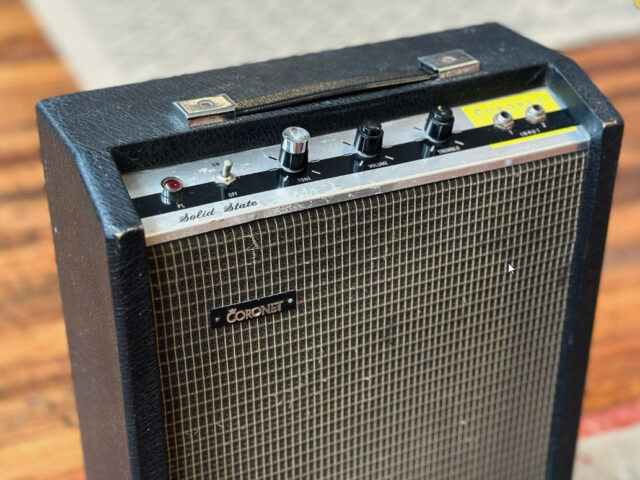
Since I’d persisted, my parents bought me a Coronet 5W amplifier a year later. I remember my dad taking me to Johns TV in Glenroy, which is where he brought the amp home from. Dad always supported me with music, and he had a musical connection of his own: back in his homeland he volunteered at the local fire station, and when there were no fires the crew formed a band. Dad played drums. I loved the tremolo.
That little amp served me for many years, and it had the typical impact on my schooling: every hour I should have spent studying went into the guitar and the amp instead. I avoided study and played.
Mr Westrup and the 12 bar blues in E
At Broadmeadows Technical School I struck up a friendship with Mr Westrup (Peter Westrup), my Maths and Science teacher, who also played guitar. He taught me the 12 bar blues in E. I mastered the rhythm and he played lead over the top on his American Telecaster. We played at lunchtime in the school portables, often to an audience. I remember kids peering in through the windows of the portable classrooms, wondering where the sound was coming from. It was a blast.
Little did I know then that his Telecaster would be worth a fortune today. I remember his gear well: I’m pretty sure he brought his guitar and his Fender Silverface amp to school. It’s all great gear now, and that same combination, a Telecaster through a Fender Silverface, is my staple setup. My go-to guitar today is a 1970 American Telecaster Custom. Those lunchtimes in the portables left me with more than the 12 bar blues; they shaped the sound I still chase.
I only recently learned that Peter went on to play guitar in an early Australian Christian rock and gospel group. Looking back, it makes perfect sense that those lunchtime jams were so good.
He taught me plenty in the classroom too. I still remember his science lesson on combustion, one of those lessons that sticks with you for life.
Peter, wherever you are: thank you. You probably know very little about the impact you had on my life. A Maths and Science teacher gave up his lunchtimes to teach a kid the 12 bar blues in E, plugged in beside him, and made music feel like something I could actually do. Everything I’ve played since, from the pubs to the studio to the stage, traces back to those lunchtimes in the portables. I hope this finds its way to you.
Late 70s: The Innocent Bystanders
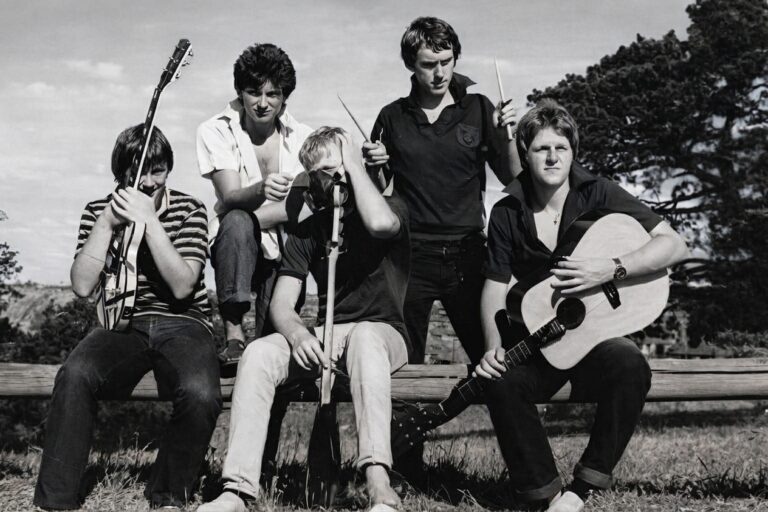
In the late 70s I was in one of the first punk rock bands in Melbourne, The Innocent Bystanders. We formed while I was still at school. My older brother, much older than me, was on vocals, and Rob Lamos, a great friend of mine, was our main lead guitarist.
I was heavily influenced by The Angels, Ed Kuepper and Chris Bailey of The Saints. There were no MP3 players in those days: I played my Eternally Yours album until it had no more grooves left, learning all the chords. Working out a song was hard work: there were no tabs and no tools, so we had to listen on cassette tapes, and I’d even slow the tape motor down with resistors to pick out the chords. It was slow, fiddly and exactly the kind of problem Rob and I loved solving.
Rob and I weren’t just bandmates, we were tinkerers. We jammed constantly, and we shared a love of electronics, so we built our own guitar amps together. Back then there were only a handful of effects pedals you could buy, and anything beyond the basics was out of reach for a couple of school kids. So we built our own. We made experimental guitar effects from scratch and plugged them in to hear what they did, and a lot of what came out of those amps was sound nobody else had.
That mix of loud music, a soldering iron and a good mate is what I remember most about the Bystanders. We weren’t only playing punk, we were building the gear that made it sound like us.
The 80s: Petty Sessions and Merging Traffic
The 80s were big, loud, beery years for a young muso in Melbourne, and I was right in the thick of them. In the early 80s I sang and played in a solid rock outfit, Petty Sessions. We started working the pubs and experimenting with original songs, supporting The Rocket 88’s, The Stockings and The Radiators at places like Bombay Rock, Bananas and Club Chevron. Pubs and band rooms were where the music scene lived: you earned your spot on stage, you learned your craft one gig at a time, and you made your mates there. We used to practise at Great Dane Studios in Brunswick, where the amps were loud and the rehearsals ran long.
My muso mates in those days included the Sultana brothers, Patrick and Mario. Their dad, Anthony, would come along to listen and offer advice. His contribution to music turned out to be bigger than any of us could have guessed: through his daughter, Tash Sultana.
In the late 80s I joined Merging Traffic, a local rock band, with my friend the late Robert Lamos, a legendary guitarist I grew up with. I’d listened to too many bands by then and bought many effects to change my raw sound. The 80s stuffed around with my mind, and our music went somewhere deep and dark with reggae influences. What I found was that drinking beer and listening to Mental As Anything suited me down to a T.
They were grand times, but the 80s also pulled me away from my root core music: the simple 12 bar blues in E and the raw sound I started out with in the school portables. A rack of effects and darker songs took me a long way from where I began. It was only after I stepped back from the stage and lost myself in my own studio that I found my way home.
Building a studio, and Neil Young
“24 and there’s so much more.” — Neil Young, Old Man
That line from Neil Young stayed with me. I took a break from the stage to focus on recording. I built my own studio, mixing desk, amplifiers and effects, recorded my own songs and wrote lots of lyrics. Neil Young was my mentor: his songs taught me that a rough, honest sound and words that mean something are worth more than any rack of gear.
Biting the bullet: my own mixing desk
Then I bit the bullet and decided to build my own mixing desk. Hell yeah: according to RMIT I was a software engineer now, so I had plans. First came the drawing board and the circuit diagrams, working out every channel from input to output. Then came the shopping list, buying every part: resistors, capacitors, op-amps, pots, faders, switches, connectors, a transformer and power supply, and a pile of cable.
After that it was bit by bit, the old-fashioned way. A desk like that is a lot more than a circuit: it means drilling and cutting the panel and chassis to fit, with the soldering iron, the drill and the hacksaw never far away, then wiring up channel after channel, testing each one and chasing down every hum, crackle and dud joint. Every channel needs a preamp, EQ and level control, and the power supply has to be clean or the whole thing hums, so there is plenty to go wrong.
It took me over six months. But in the end I had my own recording mixing desk, built with my own hands, and I knew every wire in it.
Somewhere in those years I started to realise that I was just another muso, one of thousands who loved the music but needed to work elsewhere to sustain his life. It was a humbling thing to admit, and it didn’t make me love the music any less.
1991: Olya, and the kids
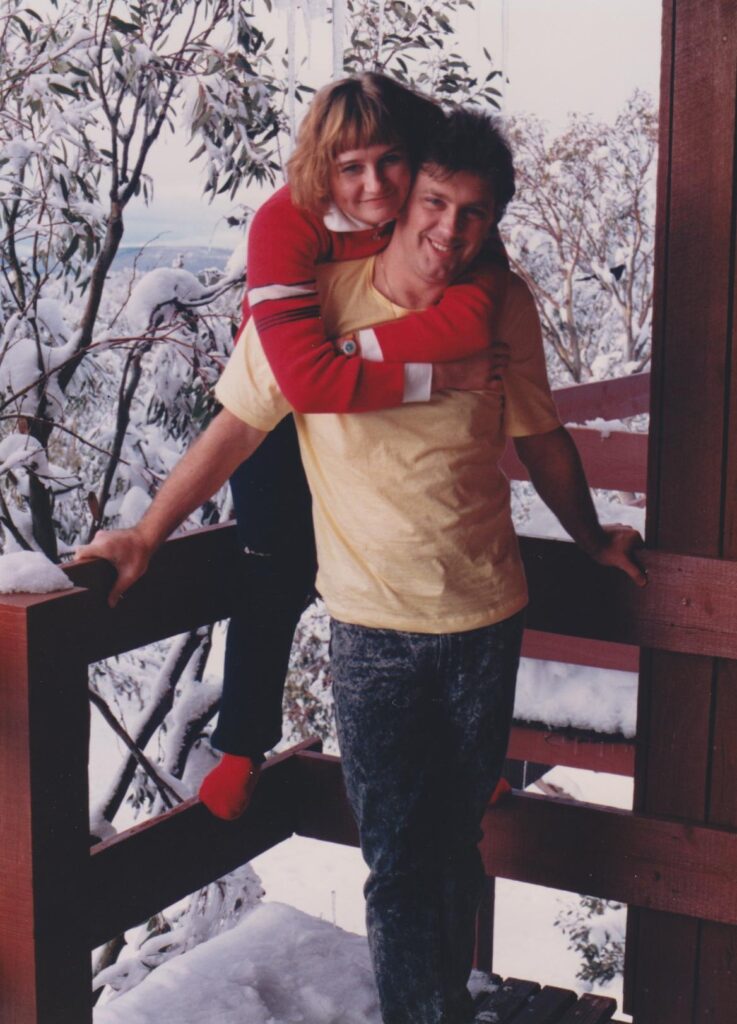
I married Olya in 1991, and that was when my direction really began to change. The studio, the songs and the guitars didn’t go anywhere, but life had a new centre, and music found its place alongside it rather than in front of it.
Olya always supported my music. She put up with the gear, the late nights, the rehearsals and the wires across the floor, and she never once asked me to give it up. Not many people would.
We went on to have three children, and music was never far away. We paid for piano lessons and taught them sheet music, the proper way, which is more than I ever had. There were no cassette tapes to slow down with resistors for them.
Watching your kids grow up is something else. One day you’re carrying them in, the next they’re picking out a tune on the piano, and somewhere in between the years just disappeared. I’d hear them practising down the hall and think, hang on, wasn’t that me with the Aria and the little Coronet not long ago?
Music was always there in the background, humming away, because there were other things happening: work, bills, school runs, birthdays and a hundred little dramas. But it never left. Those were great years, and I wouldn’t swap them for any stage in the world.
Back on stage: Los Wages
In the late 90s I made my comeback to live music. This was my second shot at being a big rock star. I always knew I’d make it, it was only a matter of time, so I had to keep chasing the dream. This time I had my family by my side, and a ready-made fan club who had no choice but to clap.
The band was Los Wages, and I was playing alongside Adrian Tesoriero (Ade), another legendary guitarist. We mainly played standards that people can drink to, with a laid-back, cheeky style and a crowd that was always welcome to shout out a request.
The (not so) official Los Wages bio
Los Wages is a Melbourne-based musical group renowned for its incredible show, primitive sounds, trashy image and uninspiring stage act.
Despite this, the group can be often found playing at clubs, venues and ski resorts for events such as Rock-nights, drunken binges, weddings (which often resemble drunken binges), club nights, and formal receptions and snow resorts.
There have been many studies conducted on “Los Wages’s effect on the human brain, nexus and size”. The findings have not been revealed previously.
To put it bluntly, individuals coming to Los Wages shows become more thirsty and sexually active. In many shows, the crowd gets suddenly wild, men are taking their shirts off and the girls are throwing their bras and panties to the stage and chandeliers. The human karma becomes more positive and the personal effect is something that is better described when drunk.
When we weren’t playing we were drinking. We had many great gigs and good times, with special guests including Ross Wilson, Chris Doheny, Lindsey Fields and some Australian Idol rejects.
Mt Buller, Friday night
If you asked me where I felt most alive as a muso, I’d have to say Mt Buller. We had a lot of laughs up there, and I can still hear them.
It always started the same way. Ade, Alby, Damian and I would pack the cars straight after work and hit the road, buzzing before we’d even left the driveway. By the time we reached the mountain it was often snowing, and sometimes it was a full blizzard. We’d unload in the freezing dark, lugging amps and guitars through the white-out, hands numb, laughing at how ridiculous it was. Then we had to set up fast and put on a show at the Whitt on a Friday night. Somehow it always came together.
A few drinks helped: beer, wine, schnapps, whisky, you name it. Looking back, it was all part of the coping mechanism, our way of keeping the good times rolling and the cold out.
But it was the crowds I remember most. They always wanted more, and we were never going to say no. So when we finished at 1.00am we’d pack up the electrics, grab the acoustics and head down to Pension Grimus for what was meant to be a laid-back session. It never was. The songs kept coming, the voices got louder, and nobody wanted the night to end. We’d play until 6.00am, then stagger back to try to get a bit of sleep before the Saturday night show.
I’m paying for it now. The body reminds me, and I’m not as quick to bounce back as I used to be. But if I could climb into that car again, with those mates, in that snow, I’d do it in a heartbeat. I wouldn’t change it for the world.
Today
“Dim Lights, Thick Smoke, and Loud Loud Music.”
That was the life, and those days are over. These days you’ll still find me in various muso crowds, playing parties, clubs, BBQs, corporate venues and the odd ski resort, with various muso friends. But the smoke has cleared, the lights are a bit brighter, and the volume has come down a notch.
My amps are much lighter now. Carrying that Fender Twin is a goal out of reach these days: it’s not good for the back, and my heart needs to lean on the lighter things in life. Gigs are not as frequent as they used to be, but they’re never far from my mind. Even when the lights are off and the music has ended, the inspiration continues.
Thank you
Looking back, music has been the thread running through my whole life: a record in a stranger’s lounge room, a hand-me-down guitar, a teacher at lunchtime, a mate with a soldering iron, a family at my side. Thank you to my friends, the muso mates, the crowds who shouted for more, and the people who stood beside me on and off the stage. Thank you to my family, and to Olya, who has always supported me. And thank you to life itself for the noise, the laughs and the memories. I wouldn’t change a note.
My aim is to share some of my relationship with music through this website. Thanks to everyone for your support, comments and feedback.